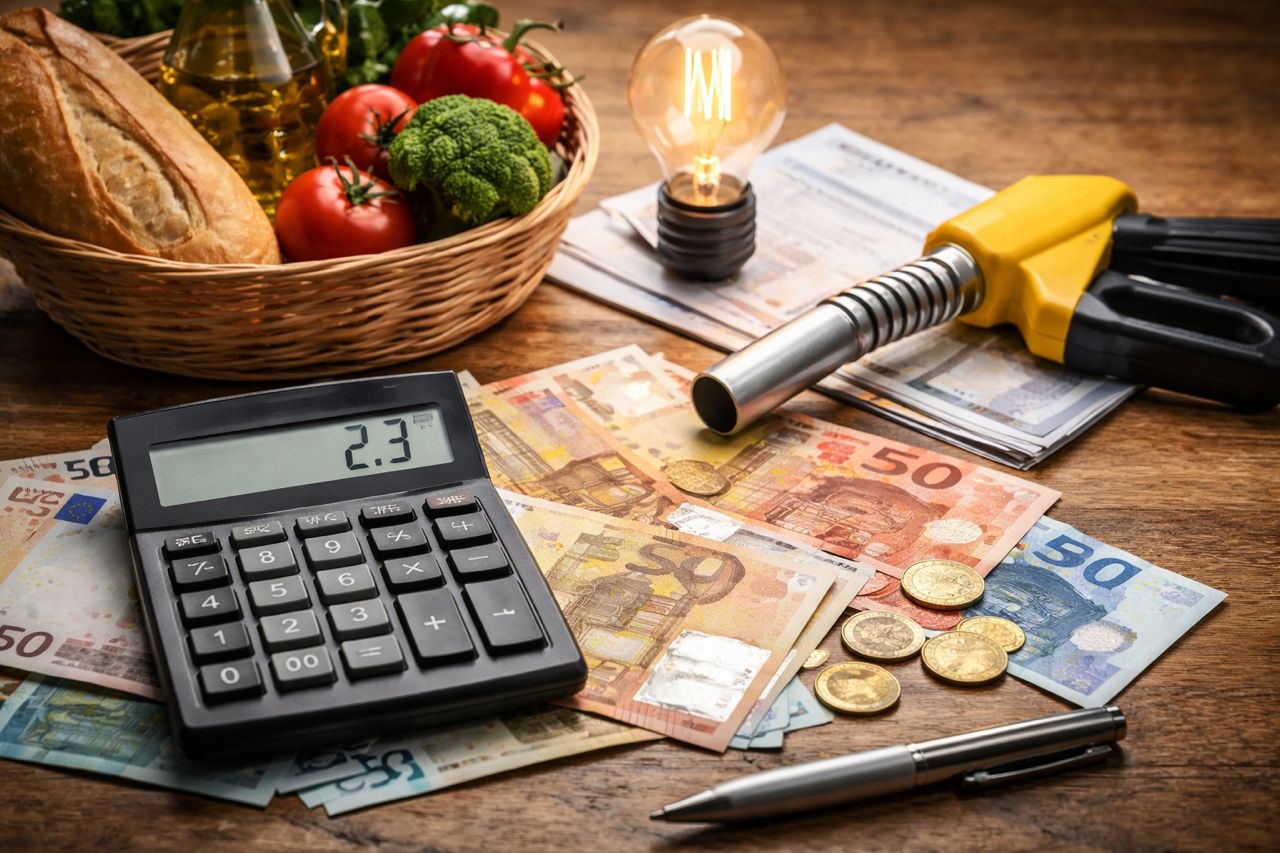
According to preliminary figures, Spain’s annual inflation rate remained unchanged at 2.3% in February, as lower electricity prices offset increases in fuels, food, and hospitality services.
Cheaper electricity contributed to easing the rate, according to Agencia EFE, while rising costs for food and non-alcoholic beverages, restaurants and accommodation services, and fuels and lubricants exerted upward pressure.
The February Consumer Price Index (CPI) flash estimate was released on Friday by the National Statistics Institute.
If confirmed, the result would mark a reversal of the three-month moderation trend that followed the 3.1% peak in October.
Food pressures continue, energy in negative territory
In February, the statistics office published advance data for the first time for several special groups considered highly relevant, including unprocessed food, energy products, services, and processed food, beverages, and tobacco.
Among these categories, energy products were the only group to record a negative annual rate, at -3.1%. In contrast, unprocessed food increased by 6.7% year on year.
Services rose by 2.3%, while processed food, beverages, and tobacco recorded an annual increase of 3.5%.
In the detailed breakdown, industrial goods excluding energy products increased by 0.9%, while processed food, beverages, and tobacco rose by 2.3% year on year.
In February, the overall annual inflation rate excluding energy products stood at 2.9%. When food, beverages, tobacco, and energy products were excluded, the overall rate was 2.8%.
Core Inflation is increasing
According to estimates, core inflation—which excludes unprocessed food and energy products—rose by 0.1 percentage point to 2.7% year on year.
Since its low of 2.2% in May, the core rate has recorded 10 consecutive months of modest increases or stability and has now reached its highest level in recent months.
According to the statistics office, consumer prices increased by 0.4% in February compared with January, marking the largest monthly rise since October 2025.
ECB target and EU-harmonized measure
The annual rate of the Harmonised Index of Consumer Prices (HICP), used for comparison within the European Union, stood at 2.5%, 0.1 percentage point higher than the previous month.
Estimated core HICP inflation was 2.8%, with a monthly increase of 0.4%.
According to the Ministry of Economy, Trade and Business, Spain continues to follow a price-control path aligned with the European Central Bank’s target of around 2% growth.
In a government statement, it said this moderation supports wage growth above inflation, allowing households to increase their purchasing power.
The post Spain’s inflation holds at 2.3% in February on energy dip, fuel rise appeared first on Invezz
