The Iran war has been a brutal education in what happens when a geopolitical risk that everyone acknowledged but nobody fully priced suddenly materialises.
Global GDP growth forecasts for 2026 have already been revised down by 0.7 percentage points, while Brent crude has surged past $100 a barrel—its highest in decades.
Inflation expectations are rising across the OECD, and trade corridors from Suez to Singapore are buckling under the strain.
We are now looking at potentially the worst energy shock since the 1970s, as three thousand ships are parked in the Persian Gulf.
Investors who had written off Hormuz as a tail risk are now paying for that assumption at the pump, at the grocery store, and in their portfolios.
Taiwan is the same lesson, waiting to happen. Except the numbers are bigger.
Taiwan: a single point of failure
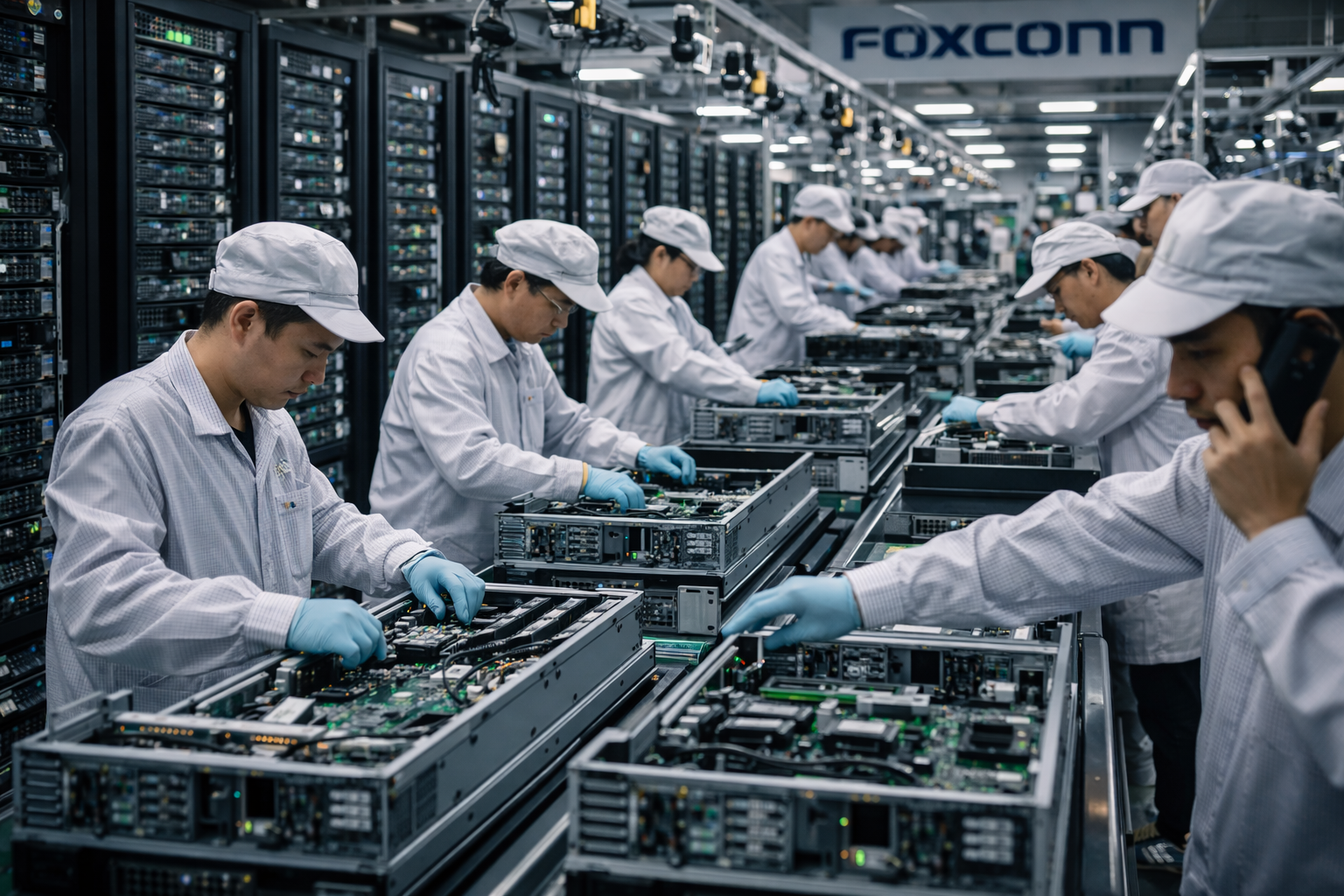
Taiwan Semiconductor Manufacturing Company (TSMC) produces approximately 90% of the world’s most powerful chips that power data centres, fighter jets, smartphones, and electric vehicles.
No other company on earth can manufacture at the same level of sophistication. No alternative facility can replace TSMC’s output on a timeline shorter than five to seven years.
This is not an accident of geography.
It is the result of decades of concentrated investment, institutional knowledge, and engineering talent that cannot simply be airlifted to Arizona and reassembled.
TSMC is currently investing $100 billion in US facilities, and those plants will matter enormously in the long run.
In the short run, the world’s most advanced chips still come from a 36,000 square kilometre island that China considers its own territory.
Eyck Freymann, a fellow at the Hoover Institution and author of an upcoming book on Taiwan strategy, recently said that
A serious crisis in the Taiwan Strait would trigger commercial and financial disruption on a scale that makes Hormuz look manageable.
That is worth sitting with. The Hormuz closure is already the worst energy shock in recorded history. Taiwan would be worse.
What is actually happening right now?
China has not invaded Taiwan because it does not need to—yet. What it is doing is more patient and, in some ways, more effective.
PLA air incursions around Taiwan rose from 380 in 2020 to 5,709 in 2025. China conducted its most extensive military drills around Taiwan ever on December 29, simulating a total blockade of the island.
Its 2026 defence budget has been raised to $278 billion, a 7% increase, even as GDP growth slows.
Beijing has hardened its official language on Taiwan in the Communist Party’s new Five-Year Plan and is running AI-powered propaganda and election interference operations against the island’s upcoming elections.
The International Crisis Group describes the status quo in the Taiwan Strait as “precarious.”
A prominent Chinese think tank at Tsinghua University ranks Taiwan as Beijing’s number one external security concern for 2026.
The Trump administration has introduced its own layer of uncertainty.
The 2026 US National Defense Strategy does not mention the Taiwan Strait. Trump said in January that Taiwan was “up to” Xi Jinping, while also claiming Xi had promised not to invade during Trump’s term.
What that informal assurance covers and whether it holds is unclear.
The upcoming Trump–Xi summit will be the most closely watched diplomatic event of the year for anyone with exposure to Asian markets.
The Iran war changed the calculus
Here is the counterintuitive insight that most investors are missing.
The US military display in Iran is not making China more likely to attempt a military invasion of Taiwan. It is making China more convinced that non-military pressure is the smarter approach.
The lessons Beijing is drawing from the Iran campaign are pushing it toward economic coercion, blockades, and grey-zone pressure rather than direct military action.
That is the scenario investors need to model now, not the dramatic amphibious landing that features in Pentagon war games.
A partial blockade or “quasi-blockade” that disrupts deliveries without triggering a formal US military response is entirely plausible and would still halt semiconductor exports almost immediately.
The difference between that scenario and an invasion is that it is harder to define, harder to respond to, and could persist for months before markets reach a consensus on how serious it is.
At the same time, China has been watching Hormuz carefully and acknowledges that chokepoint denial works even when the blocking party is being bombed.
Beijing has spent the past year stockpiling oil, importing 15.8% more crude in the first two months of 2026 than the same period last year and building a strategic reserve of approximately 1.2 billion barrels.
That is widely understood as preparation for the sanctions and supply disruptions a Taiwan contingency would trigger.
Implications for investors
Since the Iran war began, Taiwan’s main ETF is down 6.75%, while South Korea is down 15% and Japan is down 10%.
Taiwan has been resilient partly because of its contingency planning, with three months of oil stockpiled, idle coal plants being turned back on, and alternative helium sources being secured from US suppliers.
Taiwanese chip companies can likely navigate the current Middle East disruption through the summer by paying more and passing costs to customers.
But the Iran parallel is the point. Nobody thought Hormuz would actually close either.
The practical implication for investors is not to wait for a binary event. The grey-zone campaign is already running.
Companies with concentrated exposure to Taiwan-produced chips—Nvidia, Apple, AMD, and every hyperscaler with AI ambitions—are carrying geopolitical risk that is structurally underpriced.
Defence stocks across the Indo-Pacific are among the most durable spending stories of this decade, regardless of outcome.
And the global race to build alternative semiconductor capacity, from Arizona to Dresden to Osaka, represents one of the few investment themes that gets stronger the worse the Taiwan situation becomes.
The world built a single point of failure into the global technology stack. It is not a secret.
The question is whether investors are taking it seriously before the moment they are forced to.
The post After Hormuz, is Taiwan the next economic shock no one is ready for? appeared first on Invezz
