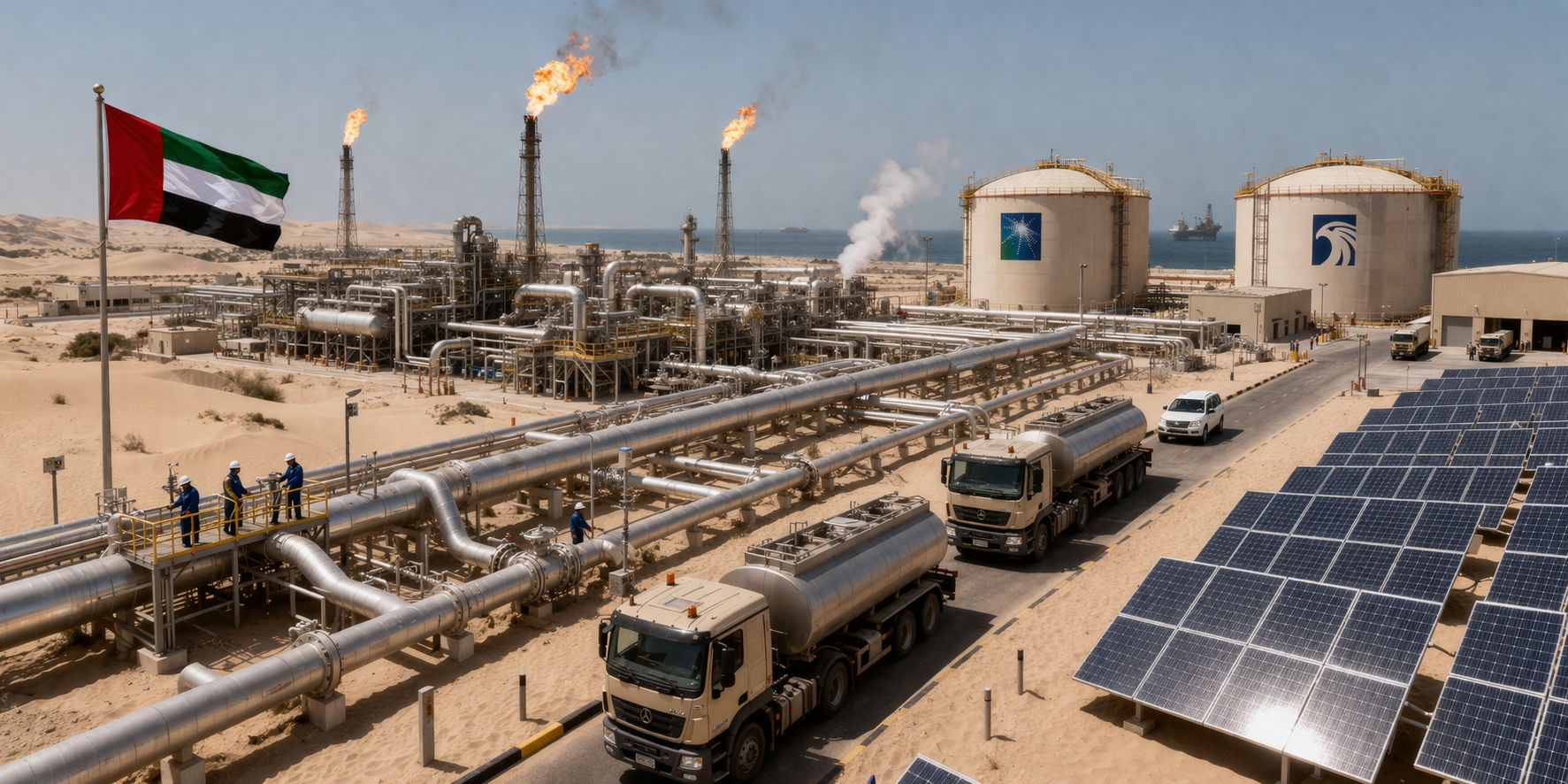
The cost to repair and restore damaged energy infrastructure in the Middle East could climb to at least $25 billion, according to initial estimates from Rystad Energy, which expects the figure to rise further based on its assessment of impacted facilities.
“Spending is likely to be driven primarily by engineering and construction, followed by equipment and materials,” according to the Rystad analysis.
Severe global oil and gas supply disruptions have been caused by the war in the Middle East.
The conflict has reportedly led to damage and shutdowns of vital energy infrastructure throughout the region, including liquefied natural gas (LNG) trains, refineries, fuel terminals, and critical gas-to-liquids facilities.
A significant exception in the analysis of repair costs and full restoration timelines by severity tier is the situation in Qatar’s Ras Laffan Industrial City.
Qatar’s Ras Laffan
The destruction of LNG trains S4 and S6 has led to a declaration of force majeure and a 17% cut in capacity, which amounts to approximately 12.8 million tonnes per annum (Mtpa).
Restoring the facility will require more than just capital, with a complete recovery expected to take up to five years, Rystad Energy said.
The extended timeline is due to a global shortage of the large-frame gas turbines needed for the main LNG refrigeration compressors.
Only three original equipment manufacturers (OEMs) supply these turbines, and all entered 2026 with significant production backlogs of approximately two to four years, largely driven by demand from data center electrification and the decommissioning of coal plants, the Norway-based energy intelligence company added.
The recovery of the Gulf region will be primarily shaped by structural limitations, rather than by the availability of financial capital.
Although some assets may be functional again within a few months, others could take years to be fully restored, Audun Martinsen, head of supply chain research at Rystad Energy, said.
“Beyond the status of the Strait of Hormuz, every day of damaged or shut-in infrastructure pushes pre-war production capacity further out of reach,” Martinsen said.
“Iran’s South Pars offshore field and Qatar’s Ras Laffan facility stand out as particularly concerning cases,” he said.
Recovery at Ras Laffan is likely to be slow due to the extent of the damage and the long lead times required for essential equipment, Martinsen said.
He said that in contrast, Iran, being legally excluded from Western supply chains, will need to depend on Chinese and domestic contractors.
Although technically possible, this approach may prove both slower and more costly.
Constraint on investment cycle timing
Another distinct disruption scenario, beyond Qatar, is unfolding in neighboring Bahrain.
The BAPCO Sitra Refinery was hit twice, resulting in confirmed damage to two crude distillation units (CDU) and a tank farm, prompting a declaration of force majeure across the group’s operations.
The core constraint is the timing of the damage in relation to the asset’s investment cycle, rather than equipment shortages or sanctions.
The facility had just reached mechanical completion of its $7 billion modernisation program last December. When the attacks occurred, engineering, procurement, and construction (EPC) contractors were still onsite finalising ramp-up obligations, according to Rystad.
The destruction of a newly commissioned CDU block, mere months after first production, has eliminated novel processing capacity, the agency said.
This delays the revenue that was intended to support the recent substantial investment.
Furthermore, restoring the damaged units will likely necessitate the re-mobilisation of international contractors, according to Rystad’s analysis.
This will occur at costs inflated by the conflict and under the uncertainty of war-risk insurance, given how recently the assets came online.
Disruptions were also moderate-to-minor in several other countries, such as the UAE, Kuwait, Iraq, and Saudi Arabia.
Domestic EPC ecosystem: Crucial variable in recovery speed
A crucial, yet often underestimated, variable consistently shaping the recovery path across all affected facilities is the density and closeness of the domestic Engineering, Procurement, and Construction (EPC) ecosystem surrounding each asset, a factor generally overlooked in standard damage evaluations, Rystad Energy’s analysis stated.
“Saudi Aramco’s rapid restart at Ras Tanura, where maintenance teams were already onsite for a planned turnaround when debris fell inside the perimeter, provides the clearest example of the advantages enabled by deep domestic capability.”
Regional recovery speed hinges on the promptness of capital deployment and the effectiveness of execution as repair spending increases.
Operators will likely focus on restoring current fields over new developments, increasing demand for EPC contractors and OEMs, especially those with regional experience and existing agreements with national oil companies, the analysis stated.
“Near-term work will most likely focus on inspection, engineering, and site preparation, followed by equipment replacement and construction as procurement constraints ease,” Rystad said.
“In Iran, continued sanctions would limit access to Western contractors and technology, leaving domestic and East Asian players to capture most recovery-related activity.”
The post Middle East faces at least $25B repair bill for damaged energy infra appeared first on Invezz
